2026 How to Choose the Best Pressure Washing Equipment?
Choosing the right pressure washing equipment is crucial for both professional and personal use. The effectiveness of your cleaning tasks relies heavily on the tools you select. With a myriad of options available, it can be overwhelming to determine which equipment is best suited for your needs.
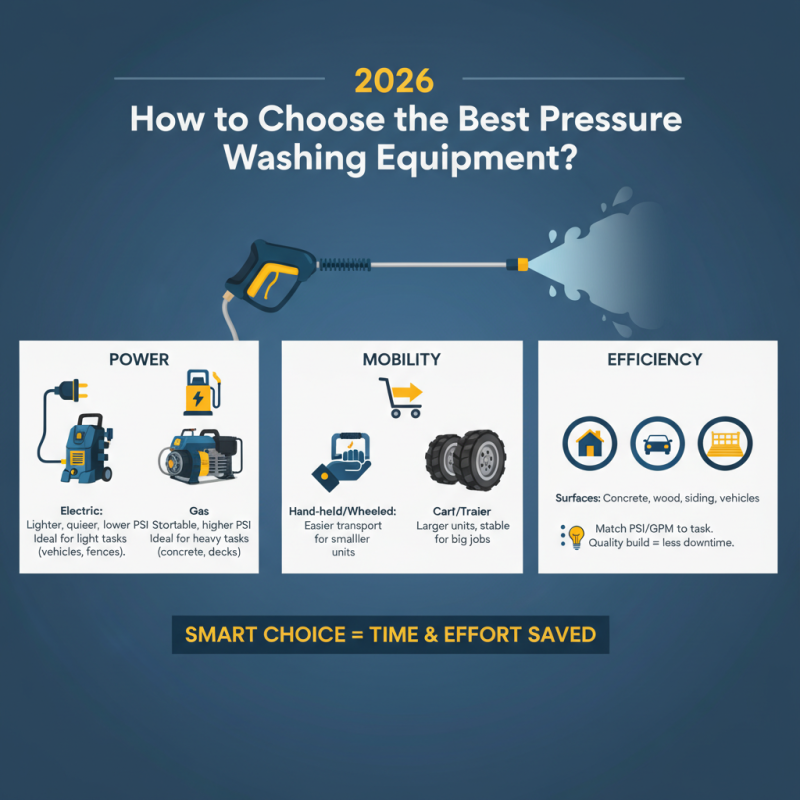
When selecting pressure washing equipment, consider key factors like power, mobility, and efficiency. For instance, electric pressure washers are often lighter but may lack the intensity needed for heavy-duty cleaning. Conversely, gas-powered models offer greater strength but can be cumbersome.
Additionally, thinking critically about your specific projects will help narrow down your choices. Reflect on what surfaces you will clean, whether it’s concrete, wood, or vehicles. Understanding your needs will lead to more informed decisions. Investing in high-quality pressure washing equipment can save time and effort, reducing the risk of unexpected issues in the clean-up process.
Understanding the Different Types of Pressure Washing Equipment
When selecting pressure washing equipment, it’s crucial to understand the various types available. High-pressure washers are often the go-to for heavy-duty tasks. These machines can generate up to 4500 PSI. This makes them ideal for tackling tough surfaces like concrete and brick. Conversely, electric pressure washers are suitable for lighter jobs. Typically, they operate at lower pressures, around 1300 to 2000 PSI. They are excellent for tasks like washing cars and cleaning decks.
Another essential type is the hot water pressure washer. According to industry reports, hot water machines can be 50% more effective than cold water models for oily or greasy surfaces. This efficiency can save both time and water. However, these devices can require more maintenance and a robust power source. It’s wise to consider your specific cleaning needs and how often you’ll use the equipment.
Understanding the material construction of these washers matters too. Many come with aluminum or plastic components that may not withstand heavy use over time. Additionally, the weight of the machine affects mobility. A heavier unit may be stable but harder to maneuver. Every choice impacts your workload and efficiency. Therefore, reflecting on your needs against these options is essential for long-term satisfaction.
2026 How to Choose the Best Pressure Washing Equipment?
This chart illustrates the different types of pressure washing equipment along with their effectiveness and typical usage scenarios. The data shows how various pressure washers rank in terms of PSI (pounds per square inch), suitable surface types, and overall versatility.
Key Features to Consider When Selecting Pressure Washers
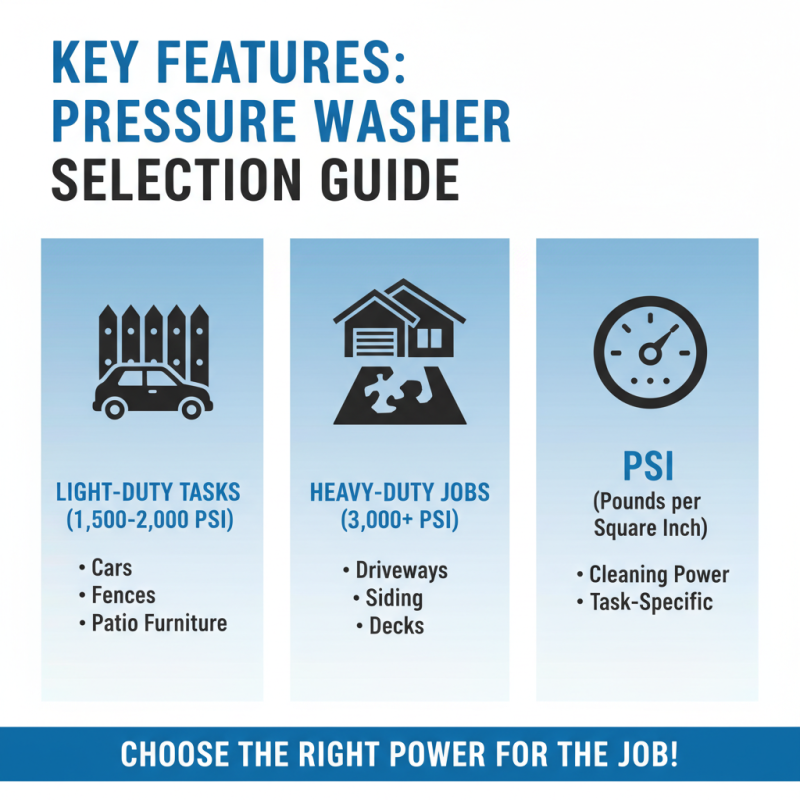
When selecting pressure washing equipment, considering key features is essential. Different jobs require different pressure levels. Reports indicate that pressure washers are rated in PSI (pounds per square inch). A machine with 1,500 to 2,000 PSI is ideal for light tasks, while 3,000 PSI or more is better for heavy-duty jobs, such as cleaning driveways.
Flow rate, measured in GPM (gallons per minute), also significantly impacts efficiency. A higher GPM allows for quicker cleaning. Ideally, look for models with a flow rate of at least 1.5 GPM. Additionally, the type of pump matters. There are axial cam and triplex pumps. Triplex pumps generally offer better durability and performance. However, they may come at a higher cost.
Consider the weight and portability of the machine. Heavier units may deliver more power but can be cumbersome. Also, pay attention to safety features, like automatic shut-off mechanisms. According to a recent industry survey, nearly 20% of accidents occur due to equipment misuse. It's vital to ensure that the chosen pressure washer provides adequate safety measures, especially for less experienced users.
Evaluating Pressure Ratings and Flow Rates for Efficiency
When selecting pressure washing equipment, understanding pressure ratings and flow rates is critical. Pressure, measured in PSI (pounds per square inch), determines how forcefully water is delivered. Higher PSI figures can effectively clean tough surfaces but may risk damaging delicate materials. A study indicated that 3000 PSI is optimal for many cleaning tasks, balancing power and safety.
Flow rates, expressed in GPM (gallons per minute), define how much water the machine uses. Machines with a higher GPM rinse faster, making them more efficient for large areas. However, they may lead to excessive water usage. Reports suggest that a flow rate of 2.5 GPM is adequate for home use, ensuring efficiency without waste.
Many users overlook the relationship between PSI and GPM. An ideal machine combines both attributes for effective cleaning. A machine rated at 2500 PSI and 2.5 GPM is effective for most residential needs. Yet, be cautious; not all surfaces can handle high-pressure cleaning. Always consider the material of the surface being cleaned to avoid potential damage.
2026 How to Choose the Best Pressure Washing Equipment?
| Model |
Pressure Rating (PSI) |
Flow Rate (GPM) |
Effective Cleaning Area (sq ft) |
Weight (lbs) |
| Basic Model |
2000 |
1.5 |
300 |
20 |
| Intermediate Model |
2800 |
2.5 |
600 |
25 |
| Professional Model |
3500 |
3.0 |
800 |
30 |
| Heavy Duty Model |
4000 |
4.0 |
1000 |
35 |
Assessing Portability and Ease of Use in Pressure Washers
When selecting pressure washing equipment, portability and ease of use are crucial factors. A lightweight machine can save you time and energy. Look for units that have wheels and adjustable handles. This enhances mobility, especially if you need to navigate stairs or tight spaces. Portability makes a significant difference in how efficiently you can complete your tasks.
Tips: Test the weight of the pressure washer in-store. Ensure you can lift it comfortably. Consider models with ergonomic designs to reduce strain.
Ease of use includes user-friendly controls. Look for machines with straightforward settings and good instruction manuals. This helps you learn how to operate the washer quickly. It takes time to master pressure washing, but intuitive equipment can ease the learning curve.
Tips: Read online reviews before purchasing. Look for feedback on setup and operation. A little research can prevent buyer’s remorse. Don't hesitate to ask experts for recommendations. Their insights can be invaluable.
Budgeting for Pressure Washing Equipment: Cost vs. Value
When considering pressure washing equipment, budgeting is crucial. Costs can vary widely based on features. Knowing what you need can guide your spending. High-end machines may offer advanced features, but do they justify the price? Sometimes, a mid-range model can deliver similar results without breaking the bank.
Value is all about long-term benefits. Investing in quality equipment may cost more upfront, but it could save you money over time. Durable machines typically require fewer repairs. Look for warranties that reflect manufacturer confidence. Also, consider maintenance needs. Cheaper models could lead to higher costs down the road due to frequent repairs.
Additionally, reflect on your frequency of use. If you pressure wash regularly, a robust model might be worth it. However, for occasional jobs, a less expensive unit may suffice. Evaluate your specific needs. This will help ensure your budget aligns with the value you expect. The right choices today can lead to significant savings tomorrow.