Choosing an Automatic Labeling Machine in 2026 requires more than comparing prices and headline speeds. A machine may promise 120 products per minute, yet perform differently with dusty bottles, tapered jars, or humid rooms. The right choice begins with the product, label stock, container shape, and production rhythm. Small details matter. A two-millimeter gap can become a costly quality issue across a long shift.
From practical line assessments, reliable selection usually follows a short, controlled trial. Ask suppliers to label your actual containers and labels, not only demonstration samples. Measure placement accuracy, changeover time, reject rates, operator effort, and cleaning access. Check whether the machine connects smoothly with conveyors, printers, scanners, and existing controls. Documentation should explain maintenance intervals, spare parts, training, and support response. Independent test records and reference installations can strengthen confidence, especially when claims seem unusually impressive.
The 2026 market also brings smarter sensors, vision inspection, recipe storage, and data reporting. These features can reduce errors, but they do not replace sound process design. More technology is not always better. Consider safety, hygiene, energy use, future capacity, and total ownership cost. A low purchase price may hide difficult adjustments or unavailable parts. I would not choose from a brochure alone. Recheck assumptions after the trial. The best Automatic Labeling Machine is the one that delivers repeatable results on your line, with clear evidence and support you can trust.
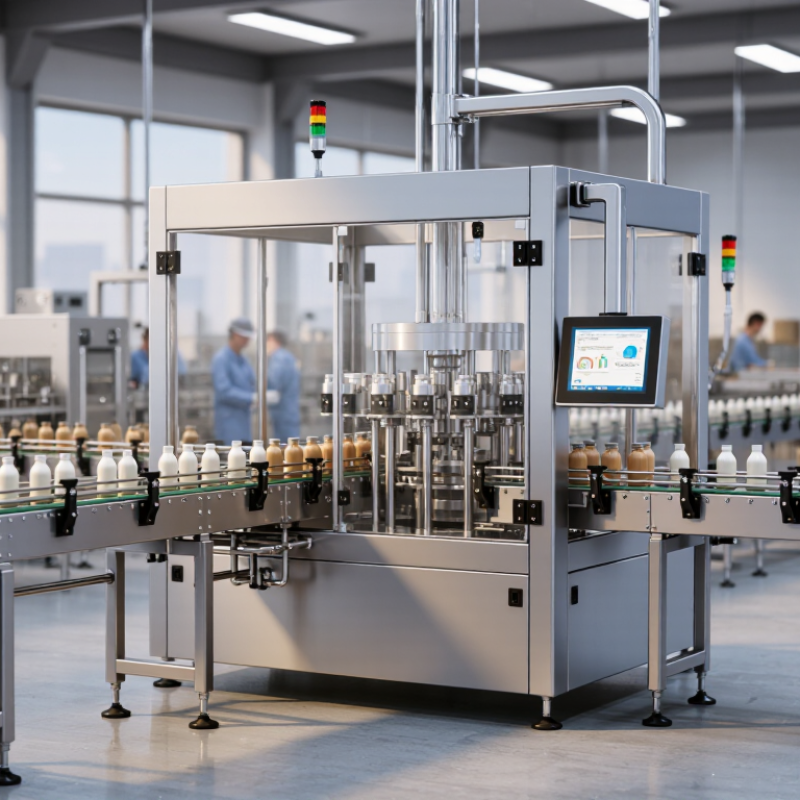
How to Choose an Automatic Labeling Machine in 2026?
An automatic labeling machine applies labels to products with consistent position, pressure, and speed. It usually works with a conveyor, product sensor, label dispenser, and control system. Some models also print batch details or scan codes during application. The machine can label bottles, jars, cartons, pouches, tubes, and other stable containers.
Accuracy matters more than advertised speed. A practical evaluation should check container shape, label material, adhesive behavior, and daily production volume. A round bottle may need wrap-around labeling, while a flat carton may require front, back, or top application. The label sensor must detect small gaps reliably. Poor calibration can cause tilted labels, wrinkles, or wasted rolls. Small errors become expensive.
Automatic labeling machines are used in food processing, beverages, cosmetics, household products, medical supplies, and general manufacturing. In a clean production area, stainless steel surfaces and easy access support regular sanitation. In dusty workshops, protected sensors and simple maintenance are more valuable. Integration with filling, sealing, weighing, or inspection equipment can reduce manual handling. However, integration is not always smooth. Operators should test real containers and labels before purchase, because sample demonstrations may not reveal condensation, uneven surfaces, or changing product sizes. A dependable machine should provide adjustable speed, clear controls, safety protection, and usable maintenance records. Fancy features are not automatically useful.
Automatic labeling machines apply pressure-sensitive, wrap-around, front-and-back, top, or tamper-evident labels with consistent positioning. The chart shows representative throughput ranges commonly used across different applications; actual performance depends on container shape, label material, product handling, and inspection requirements.
Data note: The throughput bands are indicative industry ranges compiled from commonly published equipment specifications and application guidance. They are not market-share figures and do not represent any company or brand.
When selecting a machine, first confirm the required speed, container geometry, label dimensions, application position, and production environment. Beverage lines often prioritize high-speed wrap-around or pressure-sensitive systems, while pharmaceutical and chemical applications typically place greater emphasis on accuracy, traceability, tamper evidence, and inspection integration.
Choosing an automatic labeling machine starts with the product, not the machine catalog. Container shape, diameter, height, weight, and surface texture directly affect label placement. Round bottles usually need controlled rotation. Flat cartons may require side belts or top pressure. Irregular containers can expose hidden stability problems.
I have seen a sample run smoothly, then slip after filling. Product weight matters. Product speed matters too. A fragile container needs gentle handling and accurate pressure control.
Label construction is equally important. Check the label material, adhesive, liner, roll direction, core size, and spacing between labels. Glossy film can reflect the sensor beam. Thin paper may wrinkle around a tight curve. Cold, dusty, or slightly wet surfaces can reduce adhesion.
Test the actual label batch, not only a similar sample. That mistake is common. Print quality also deserves attention when variable codes or small text are required.
Packaging conditions decide whether the system remains reliable. Measure conveyor width, line speed, product gaps, and available installation space. Confirm whether the machine can communicate with upstream fillers and downstream inspection equipment.
Tool-free adjustments can shorten changeovers between package sizes. Easy cleaning supports consistent operation, especially around food or cosmetic packaging areas. A machine may meet its rated speed but perform poorly during frequent format changes.
I would request a documented trial using real products, labels, and packaging materials. Factory tests are useful, but they cannot reproduce every shift, operator, or temperature change.
How to Choose an Automatic Labeling Machine in 2026?
Choosing an automatic labeling machine starts with the product, not the machine catalog. In production audits, I compare container shape, surface material, line speed, and label size. Round bottles often suit wrap-around systems. Flat cartons usually need front-and-back labeling. Unstable containers may require side belts or stronger product handling.
The application method changes accuracy and maintenance. Pressure-sensitive labeling is flexible and works well for many packages. It needs clean surfaces and controlled label tension. Roll-fed systems can reduce material waste on high-volume cylindrical products. They may require more careful setup when product sizes change. Print-and-apply machines suit variable data, such as batch codes or shipping information. Their print quality and sensor calibration deserve close attention.
Do not judge speed alone. A machine rated for 120 products per minute may perform poorly with dusty surfaces or uneven spacing. During testing, request samples using your real containers and labels. Check placement tolerance, changeover time, reject handling, and operator access. Ask how often rollers, sensors, and applicator parts need adjustment. Small details matter.
I have seen teams choose advanced equipment, then struggle with simple cleaning tasks. That mistake is easy to repeat. Compare total operating cost, training needs, spare parts, and future product changes. A reliable system should remain stable during long runs, but no machine fits every application. Test before purchase.
Choosing an automatic labeling machine in 2026 requires more than checking its advertised speed. Measure the container range first: diameter, height, shape, and surface material. A machine rated for 120 containers per minute may slow sharply with tapered bottles. Confirm label-position accuracy, usually stated in millimeters, and test it using your actual products.
Evaluate the labeling head, sensor system, and control interface carefully. Registration sensors should detect transparent, dark, or irregular containers without frequent false readings. Ask whether the machine supports your label width, roll diameter, core size, and adhesive type. Tool-free adjustments can reduce changeover time. Useful controls include recipe storage, fault history, speed adjustment, and clear alarm messages. Keep it simple.
Hygiene and maintenance matter on the factory floor. Check the frame material, access panels, washdown protection, and lubrication points. Safety guarding should allow inspection without exposing operators to moving parts. I once saw a fast machine lose accuracy because its conveyor was poorly aligned. That detail was easy to miss. Request a live trial with several label rolls, not a short demonstration. Also verify electrical requirements, compressed-air needs, spare-part access, and training support. A realistic acceptance test may reveal limitations that a sales sheet cannot.
How to Choose an Automatic Labeling Machine in 2026?
A suitable labeling machine must fit the whole production line, not just apply labels quickly. Check conveyor speed, product spacing, label size, and communication protocols. Confirm compatibility with the existing PLC, vision system, printer, and warehouse software. Deloitte’s 2024 Smart Manufacturing Survey found that 86% of manufacturing leaders view smart manufacturing as essential for competitiveness. Integration deserves serious attention.
Safety should be assessed during normal operation and cleaning. Look for guarded moving parts, emergency stops, safe access, and clear fault signals. ISO 12100 supports risk assessment across the machine’s entire life cycle. Maintenance also affects output. Ask about tool-free changeovers, spare-part availability, diagnostic screens, and training. PMMI reports that labor shortages continue to encourage automation investment in packaging operations. However, automation still needs skilled people.
Tips: Request a live test with your products. Measure changeover time with an operator, not only a technician. Calculate total cost over five years, including installation, utilities, software, service, rejected labels, and downtime. My first cost estimate was too optimistic because training was missing. That mistake is common. Review service response times and maintenance records before signing. A cheaper machine can become expensive when one small sensor stops production.
| Assessment Dimension | Configuration A Entry-Level Inline | Configuration B Servo Inline | Configuration C Pressure-Sensitive Rotary | Configuration D Integrated Print-and-Apply |
|---|---|---|---|---|
| Typical Application | Single-sided labeling of uniform containers | Front, back, or wrap-around labeling of variable products | High-speed labeling of stable cylindrical containers | Carton, case, pallet, or logistics-label application with variable data |
| Typical Product Range | Round or rectangular products with limited size variation | Round, oval, square, or rectangular products with recipe changes | Primarily round containers with consistent diameter | Boxes, cases, trays, pallets, and irregular shipping units |
| Practical Throughput Range | 20–80 products per minute | 40–180 products per minute | 100–300 products per minute | 10–60 labels per minute, depending on label size and print data |
| Typical Labeling Accuracy | Approximately ±1.0–2.0 mm under stable conditions | Approximately ±0.5–1.0 mm with correct product handling | Approximately ±0.5–1.0 mm on consistent cylindrical products | Approximately ±1.0–2.0 mm, depending on case position and conveyor control |
| Changeover Time | 15–30 minutes; mainly manual adjustments | 5–15 minutes using stored recipes and servo positioning | 10–25 minutes; container diameter and label placement require adjustment | 10–30 minutes; format setup and print-template verification are required |
| Line Integration | Basic conveyor interface and product sensor | PLC, encoder, reject station, line-speed synchronization, and recipe control | Infeed screw or starwheel, speed synchronization, and container-spacing control | PLC or warehouse-system interface, barcode verification, reject handling, and data logging |
| Recommended Communication Interfaces | Digital I/O; optional Ethernet connection | Ethernet-based industrial communication, digital I/O, and encoder input | PLC communication, encoder input, and machine-status signals | Ethernet-based communication, database or WMS connection, and barcode data exchange |
| Data and Traceability Capability | Basic counter, fault history, and batch settings | Recipe management, production counters, alarms, and batch records | High-speed production monitoring and reject statistics | Variable-data printing, barcode verification, audit trail, and label reprint control |
| Safety Functions to Verify | Emergency-stop circuit, guarding, and access protection | Guard interlocks, emergency stops, safe restart, and controlled access to moving parts | Guarding around rotary mechanisms, interlocks, emergency stops, and jam-clearing controls | Guarding, print-head access protection, emergency stops, safe maintenance access, and software permissions |
| Relevant Safety References | Risk assessment based on ISO 12100; electrical safety based on IEC 60204-1 | ISO 12100, ISO 13849-1, and IEC 60204-1 should be considered during machine design and validation | ISO 12100, ISO 13849-1, and applicable guarding requirements should be reviewed | Machine safety and information-security requirements should be assessed together, especially when connected to enterprise systems |
| Operator Training Requirement | Approximately 2–4 hours for normal operation and basic adjustments | Approximately 4–8 hours for recipes, changeovers, alarms, and quality checks | Approximately 4–8 hours because of high-speed operation and mechanical setup | Approximately 4–8 hours for print templates, data validation, verification, and fault recovery |
| Routine Maintenance | Daily cleaning; weekly inspection of belts, sensors, and label path | Daily cleaning; weekly inspection; periodic lubrication and servo or encoder checks | Daily cleaning; frequent inspection of infeed components, starwheel, and wear parts | Daily cleaning; print-head care; periodic replacement of rollers, belts, and applicator wear parts |
| Estimated Preventive Maintenance Time | 2–4 hours per month | 4–8 hours per month | 6–12 hours per month because of higher mechanical complexity | 4–10 hours per month, including print-quality checks |
| Common Consumables and Wear Parts | Drive belts, rollers, sensors, and label-dispensing components | Belts, rollers, sensors, encoder components, and change parts | Infeed screws, starwheels, belts, rollers, and product-contact guides | Print heads, platen rollers, ribbons where applicable, tamp pads, belts, and sensors |
| Typical Initial Equipment Cost (USD, excluding tax and installation) | $12,000–$30,000 | $30,000–$75,000 | $60,000–$150,000 | $25,000–$80,000 |
| Typical Integration and Commissioning Cost | $3,000–$12,000 | $8,000–$30,000 | $15,000–$50,000 | $8,000–$35,000, excluding major warehouse-system development |
| Estimated Annual Maintenance and Spare-Parts Cost | $1,000–$3,000 | $2,500–$7,500 | $5,000–$15,000 | $3,000–$10,000 |
| Expected Useful Service Life | Approximately 5–8 years with suitable maintenance | Approximately 8–12 years with planned maintenance and parts availability | Approximately 10–15 years when high-wear components are replaced regularly | Approximately 6–10 years; electronic and print components may require earlier upgrades |
| Estimated Five-Year Ownership Cost (Equipment, integration, maintenance; excluding labor, labels, and utilities) | $20,000–$57,000 | $50,500–$142,500 | $100,000–$275,000 | $48,000–$165,000 |
| Estimated Availability Potential | Medium Suitable for moderate production and simpler changeovers | High Good balance of speed, flexibility, and control | High Strong performance when products and formats are standardized | Medium–High Depends heavily on print quality, data systems, and applicator setup |
| Best Fit | Small or medium production volumes with few product formats | Mixed product lines requiring repeatable changeovers and future scalability | Large-volume production with consistent cylindrical containers | Operations requiring serialized, regulated, or shipment-specific labels |
| Key Buying Risk | Limited upgradeability when production volume or product variety increases | Higher commissioning cost and the need for trained maintenance personnel | Reduced flexibility for non-round or frequently changing products | Integration failures, incorrect variable data, print-head wear, or cybersecurity gaps |
| Overall Suitability for 2026 Investment | Good for focused applications | Strong general-purpose choice | Best for high-volume standardized lines | Best for traceability and digital workflows |
Cost figures are planning ranges in 2026 USD for equipment and typical integration conditions. Actual results vary with line speed, product geometry, label material, safety validation, regional labor rates, software requirements, installation conditions, and service coverage. Request a formal acceptance test using representative products, labels, speeds, and production data before purchase.