Choosing pressure cleaning equipment in 2026 requires more than comparing maximum pressure figures. A powerful machine can damage painted wood, loosen old mortar, or waste water on delicate surfaces. The right decision depends on pressure, flow rate, temperature, power source, nozzle options, and daily workload. Small details matter.
A contractor cleaning concrete driveways may need high flow and durable pumps. A property manager washing windows may value low-pressure control, quiet operation, and compact storage. Electric models suit indoor areas and noise-sensitive locations. Petrol-powered units can support remote jobs, but fuel handling, ventilation, and maintenance require greater care. Hot-water systems remove grease more effectively, although they usually cost more and need trained operation. Read the manufacturer’s instructions carefully. Ratings are not interchangeable.
This guide examines practical buying criteria for modern pressure cleaning equipment, including pump materials, hose length, safety controls, energy use, repair access, and warranty support. It also considers newer features, such as variable-pressure systems and water-saving controls. These features sound impressive, but they may not benefit every user. A cheaper machine can become expensive when seals fail or parts remain unavailable. That lesson is easy to overlook. Reliable evidence matters, so compare manufacturer specifications, independent testing, service records, and real job requirements before purchasing. No guide can predict every site. Still, a careful assessment can prevent common mistakes and produce safer, more efficient cleaning results.
How to Choose Pressure Cleaning Equipment in 2026?
Define Your Pressure Cleaning Goals and Work Environment
Start with the surface, soil type, and cleaning frequency. A patio with loose dust needs less force than concrete marked by embedded grime. Delicate siding may require controlled pressure and wider spray patterns. Pressure alone does not determine performance. Water flow, measured in litres per minute, also affects cleaning speed.
Walk through the work area before choosing equipment. Check water access, drainage, electrical supply, ventilation, and noise limits. A compact electric unit may suit an enclosed workshop, while outdoor commercial work may need longer hoses and stronger flow. For grease, seasonal maintenance, or cold conditions, heated water can improve results. Add surface cleaners, extension wands, and recovery equipment when the site requires them.
I once selected equipment by pressure rating alone. That shortcut caused slow cleaning and unnecessary splash. The real issue was weak water flow. My checklist now includes transport weight, hose storage, trigger comfort, and operator training. Small details matter.
Use published performance data, not only advertising language. Test a small area at a safe distance, then adjust the nozzle and pressure gradually. Keep records of settings that work on painted surfaces, stone, wood, and concrete. Conditions change. Wind, temperature, water hardness, and surface age can alter results. I still review my choices after each project, because an efficient setup on paper may feel awkward during a full workday.
Pressure ratings and water flow must be judged together. PSI shows the force behind the spray. GPM shows how quickly water removes loosened dirt. A machine with 3,000 PSI but low flow may feel powerful, yet clean slowly on large concrete areas. The U.S. Department of Energy’s water-efficiency guidance emphasizes matching flow to the task, because unnecessary water use increases operating costs. Grand View Research reported that the global pressure washer market was valued at approximately $2.6 billion in 2023, showing strong demand for more efficient cleaning equipment.
Cleaning performance also depends on the nozzle, spray angle, surface distance, and detergent compatibility. For patios, operators often need balanced pressure and flow rather than maximum PSI. Excessive force can strip paint, damage soft wood, or mark concrete. That risk is easy to underestimate. Real-world testing on a small, hidden area remains essential. Record the cleaning time, water use, and visible surface changes before approving a machine.
Tips: Start with the lowest effective pressure. Compare results at the same distance. Measure water use with a flow meter when possible. A useful field test is cleaning one square metre and recording the seconds required. The result may challenge the product sheet. That is valuable evidence. EPA WaterSense research also links efficient water practices with lower consumption, but efficiency should never replace safe surface control.
How to Choose Pressure Cleaning Equipment in 2026?
Choose the Right Power Source, Machine Type, and Portability
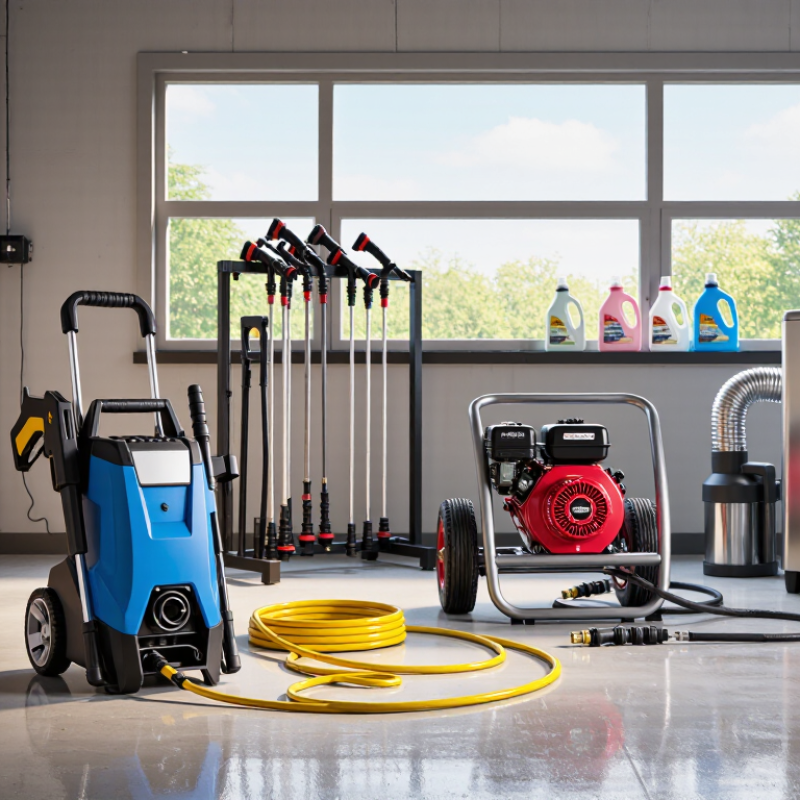
Choosing pressure cleaning equipment starts with the power source. Electric machines suit indoor work, small patios, and areas with nearby outlets. They are usually quieter and easier to maintain. Petrol-powered units provide stronger output for large driveways, farms, and extended outdoor jobs. However, they need ventilation, fuel storage, and more routine servicing. In my experience, many users choose excessive power and struggle with control on delicate surfaces.
Machine type matters as much as pressure. A cold-water unit handles mud, dust, and loose grime efficiently. Hot-water equipment works better on grease, oil, and heavy kitchen residue. Match pressure and flow to the surface. Concrete tolerates more force than painted wood or old masonry. Test an unseen area first. Small mistakes can leave permanent marks.
Tips: Check the power supply before buying. Measure hose length, handle height, and storage space. Wheels help on smooth ground but may feel awkward on stairs. A compact machine is easier to transport, though its smaller tank can interrupt longer jobs. Keep basic service records, including nozzle changes and filter cleaning. I once underestimated hose weight; the machine performed well, but moving it across wet ground was tiring. That detail changed my equipment choices.
Compare typical pressure and water-flow ranges by power source to match cleaning performance with portability and operating conditions.
Electric machines are generally compact and suitable for household and light commercial work. Gas-powered machines typically provide higher pressure and flow for large outdoor surfaces. Battery-powered units offer the greatest portability, but usually operate with lower sustained output. The ranges shown are typical equipment specifications and should be verified against the technical data of the selected model.
Choosing pressure-cleaning equipment in 2026 requires more than comparing PSI figures. Nozzles control impact, spray angle, and water use. A narrow 0-degree nozzle can damage soft wood, painted surfaces, or aging mortar. A 25-degree nozzle is usually more forgiving for general cleaning. Match the orifice to the machine’s rated flow. An incorrect size can reduce pressure, overwork the pump, or create an uneven spray pattern. I still test every nozzle on a hidden area first. Charts help, but surfaces often disagree.
Attachments should fit the task, not merely increase output. A surface cleaner can reduce streaks on concrete, while an extension wand improves reach without climbing. Use a hose with a suitable pressure rating and inspect couplers for flattened seals. Safety features deserve equal attention. Ground-fault protection, a trigger gun with automatic shutoff, thermal relief, and stable wheels reduce practical risks. ANSI/ISEA Z87.1 eye-protection guidance supports using impact-rated protection around flying grit and debris.
Noise is easy to underestimate. NIOSH’s Criteria for a Recommended Standard: Occupational Noise Exposure identifies 85 dBA over eight hours as a recommended exposure limit, while OSHA uses a 90 dBA permissible limit. Keep hearing protection available, especially near walls that reflect sound. Maintenance needs should be visible before purchase. Check oil requirements, inlet screens, pump access, and winter-storage procedures. The U.S. EPA’s WaterSense at Work guidance also treats flow rate as a central water-efficiency factor. A lower-flow setup may clean more slowly. It can still waste less water and reduce splash.
| Equipment Category | Typical Operating Range | Recommended Nozzle or Attachment | Best-Suited Applications | Key Safety Features | Maintenance Needs | Selection Guidance |
|---|---|---|---|---|---|---|
| Compact Electric Washer | 70–120 bar (1,000–1,740 psi) 6–8 L/min |
25° or 40° fan nozzle; adjustable spray lance; low-pressure detergent nozzle | Vehicles, bicycles, garden furniture, patios, balconies, and light household cleaning | Ground-fault protection, trigger safety lock, thermal overload protection, and hose connection with secure locking | Rinse the inlet filter, drain the pump after use, inspect the power cable, and store away from freezing temperatures | Choose this category when portability, low noise, and moderate cleaning power are more important than speed |
| Heavy-Duty Electric Washer | 120–180 bar (1,740–2,610 psi) 8–12 L/min |
15° or 25° fan nozzle; surface cleaner; rotary brush; foam applicator | Driveways, walls, commercial walkways, workshops, machinery, and larger vehicles | Residual-current protection, pressure relief valve, automatic motor stop, hose anti-kink design, and stable frame | Check pump oil if applicable, clean filters, inspect high-pressure seals, and verify hose and lance fittings regularly | Prioritize flow rate for large horizontal areas and pressure for embedded dirt; confirm the electrical circuit can support the load |
| Petrol-Powered Washer | 180–280 bar (2,610–4,060 psi) 10–17 L/min |
15° fan nozzle; turbo nozzle for durable surfaces; downstream detergent injector | Remote sites, agricultural equipment, construction areas, large concrete surfaces, and heavy soil removal | Low-oil shutdown, secure fuel system, thermal protection, trigger lock, exhaust clearance, and robust roll cage | Change engine oil according to the operating schedule, clean the air filter, stabilize or drain fuel during storage, and winterize the pump | Use only in well-ventilated outdoor areas; do not operate combustion-powered equipment inside enclosed spaces |
| Hot-Water Washer | 100–250 bar (1,450–3,625 psi) 8–16 L/min Approx. 40–90°C water |
25° fan nozzle; low-pressure detergent injector; heat-resistant hose and lance | Grease, oil, food residue, industrial equipment, vehicle underbodies, and sanitation-related cleaning | Over-temperature cutoff, flame monitoring, pressure relief, insulated grip, fuel shutoff, and ventilation controls | Descale the heating coil where hard water is present, inspect burner components, clean filters, and test safety cutoffs | Hot water improves grease removal but increases burn risk; use temperature-resistant accessories and suitable protective clothing |
| 25° Fan Nozzle | Medium spray angle General-purpose pressure range |
Standard fan nozzle with a color-coded holder or clearly marked angle | Concrete, masonry, decks, vehicles, equipment, and general outdoor cleaning | Trigger lock, secure nozzle coupling, and operator control of spray distance | Remove debris from the orifice, inspect for wear, and replace when the spray pattern becomes uneven | Best all-round starting option |
| 40° Fan Nozzle | Wide spray angle Lower surface impact |
Wide-angle fan nozzle; telescopic lance for elevated surfaces | Vehicles, windows, painted surfaces, siding, delicate wood, and rinsing detergent | Stable lance grip, trigger lock, and adequate stand-off distance from the surface | Flush the nozzle after detergent use and check the tip for mineral deposits | Use when coverage and reduced risk of surface damage are more important than aggressive cleaning |
| 15° Fan Nozzle | Narrow spray angle Higher surface impact |
15° fan nozzle with adjustable lance or extension wand | Hard, durable surfaces with compact areas of bonded dirt, mud, and algae | Trigger lock, controlled spray distance, stable footing, and protective face and hand equipment | Inspect the orifice for erosion and replace the nozzle if the spray pattern widens or becomes irregular | Avoid on glass, soft wood, loose paint, vehicle trim, and fragile masonry |
| Turbo or Rotary Nozzle | High-impact rotating spray Use only within rated pressure |
Pressure-rated turbo nozzle with an adjustable extension lance | Concrete, stone, hard paving, and heavily soiled durable surfaces | Trigger lock, anti-kickback control, secure coupler, and full eye and foot protection | Flush after use, inspect the rotating head, lubricate only as specified, and replace worn seals | Keep moving to prevent etching or circular marks; do not use on delicate or painted surfaces |
| Surface Cleaner Attachment | Usually matched to the washer's rated flow and pressure | Enclosed twin-rotary spray bar with splash skirt; optional casters | Large flat concrete, driveways, patios, decks, and commercial floors | Protective housing, splash control, pressure-rated swivel, stable handle, and operator foot protection | Rinse the underside, clear blocked jets, inspect the swivel, and check skirt or brush wear | Match the attachment's minimum flow requirement to the washer; insufficient flow can reduce cleaning performance |
| Foam Applicator | Low-pressure chemical application Flow depends on injector design |
Adjustable foam lance or downstream detergent injector | Vehicle pre-wash, siding, equipment degreasing, and general detergent application | Chemical-resistant seals, non-return valve, secure bottle connection, and clearly labeled detergent container | Flush with clean water after every use, clean the mesh filter, and inspect chemical seals | Use detergents approved for pressure-washer systems; never mix chemicals unless the safety data specifically permits it |
| Water Inlet and Filtration | Supply flow should meet or exceed the washer's required inlet flow | Reusable inlet screen, sediment filter, backflow protection, and correctly sized garden hose | All pressure-cleaning systems, especially those using tanks, wells, or untreated water | Backflow prevention, secure hose coupling, leak-free connections, and low-water protection where available | Clean the inlet screen frequently, inspect O-rings, prevent kinks, and protect the pump from freezing | Never operate a pump without an adequate water supply unless it is specifically designed for that method |
| Personal Protective Equipment | Required for every pressure-cleaning task | Safety glasses or face shield, hearing protection, waterproof gloves, non-slip boots, and protective clothing | All applications, with additional chemical or respiratory protection when required by the product safety information | Eye and face protection, slip-resistant footwear, hearing protection, and chemical-resistant gloves where applicable | Clean and inspect PPE after use; replace damaged lenses, worn gloves, or footwear with reduced traction | High-pressure water can penetrate skin and cause serious injury; never point the lance at people, animals, or electrical equipment |
| Routine Maintenance Program | Before each use, monthly checks, and seasonal servicing | Inspection checklist, replacement O-rings, nozzle-cleaning tool, inlet filter, and manufacturer-approved lubricants | Residential, commercial, mobile, and industrial pressure-cleaning equipment | Depressurize before servicing, disconnect power, shut off fuel, and allow hot components to cool | Inspect hoses, couplers, guns, lances, nozzles, cables, filters, leaks, and safety devices at defined intervals | Document service dates and replace pressure-rated components before visible failure |
| Important: Pressure and flow figures are typical selection ranges, not universal operating limits. Always follow the equipment's rating plate, instruction manual, nozzle specifications, local electrical requirements, chemical safety information, and applicable workplace regulations. | ||||||
How to Choose Pressure Cleaning Equipment in 2026?
Set a 2026 budget around total ownership cost, not the purchase price. Grand View Research estimates the global pressure washer market will grow at about 4.7% annually through 2030. That growth reflects wider commercial use, but it does not justify buying the largest machine. A small contractor may need a dependable 2,000–3,000 PSI unit, while heavy concrete work may require higher flow rates. Compare pressure, gallons per minute, duty cycle, pump access, and replacement-part costs.
Reserve 15–20% of your budget for hoses, nozzles, filters, surface cleaners, maintenance, and unexpected repairs. In field use, downtime often costs more than electricity. Choose equipment with readable gauges, reinforced connections, and serviceable components. The U.S. Department of Energy encourages buyers to compare operating efficiency, because repeated energy use affects long-term costs. My practical mistake would be treating warranty length as proof of durability. It is only one clue. Ask for repair procedures and realistic service intervals.
Tips: Test the machine before purchase. Record water use for one cleaning job. Keep a maintenance log. Buy one spare nozzle and inlet filter. Leave room in the budget for training and safer work practices. A cheaper machine can become expensive after several seasons. Recheck your assumptions every six months.