Why Do Global Buyers Choose Quality Pressure Washing Supplies?

Global buyers choose quality pressure washing supplies because reliable equipment protects results, workers, and long-term operating costs. A professional-grade hose should remain flexible beside a cold truck bed. A durable surface cleaner should spin evenly without leaving visible stripes. Small details matter.

Doug Rucker, a veteran pressure washing contractor and trainer, says, “The right chemical and the right pressure make all the difference.” His practical view reflects a central industry truth: cleaning power is not measured by pressure alone. Buyers also examine pump performance, nozzle accuracy, chemical resistance, spare-part availability, and technical support. They want supplies that perform consistently across concrete, brick, timber, vehicles, and delicate exterior surfaces.

Quality does not always mean the most expensive option. That assumption deserves reconsideration. A cheaper fitting may reduce initial costs, but repeated leaks can waste water, chemicals, labor, and valuable appointment time. In humid coastal regions, corrosion resistance becomes critical. In colder markets, hose flexibility and storage conditions deserve closer attention. These details make purchasing decisions more complex than comparing prices online.

Experienced suppliers usually provide product specifications, maintenance guidance, compatibility information, and transparent warranty terms. Those signals help buyers assess reliability before placing larger orders. Still, no product suits every contractor or climate. Testing a new nozzle, pump, or detergent on a small area remains sensible. Global customers choose pressure washing supplies when performance can be measured, support can be reached, and results remain dependable after repeated use.

Why Do Global Buyers Choose Quality Pressure Washing Supplies?

What Defines Quality Pressure Washing Supplies?

Quality pressure washing supplies are defined by performance, safety, and dependable construction. A strong hose should resist kinking, abrasion, and repeated pressure changes. Its fittings must connect firmly without leaking during long cleaning sessions. Small failures become expensive quickly.

Material compatibility matters too. Nozzle angles should match the cleaning task and surface sensitivity. A suitable trigger gun should feel balanced, even after several hours of use.

Clear pressure ratings help operators choose equipment without guessing. Reliable supplies also include readable instructions, maintenance guidance, and accessible replacement parts. These details show professional responsibility.

Field experience often reveals what product descriptions miss. A connector may look solid but loosen after repeated heating and cooling. A seal may perform well initially, then weaken when poorly stored.

Quality is not perfection. It is consistent performance under realistic conditions.

I still inspect threads, washers, and hose covers before every job. That habit may seem excessive. It prevents avoidable damage.

Trusted manufacturers usually test products against stated specifications and provide traceable technical information. Buyers should examine those details, not rely only on attractive claims. A durable supply saves water, reduces interruptions, and supports more controlled cleaning. Better equipment also protects workers from sudden leaks and unstable connections. The best choice is practical, documented, and suited to the exact pressure washing environment.

How Quality Affects Cleaning Performance and Efficiency

Global buyers often choose quality pressure washing supplies because cleaning performance depends on more than water pressure. The nozzle, hose, fittings, and surface cleaner must work together. Poorly matched parts can reduce spray force and create uneven cleaning lines. The result is extra passes, wasted water, and longer workdays.

Experienced operators usually check flow ratings, connection sizes, material strength, and temperature limits before starting. A well-made hose can resist kinking near a machine or sharp corner. Reliable fittings help prevent small leaks that lower pressure over time. Correct nozzles also produce a more consistent spray pattern, especially when removing mud from concrete or algae from outdoor surfaces. I have found that simple inspections often improve efficiency more than increasing machine pressure.

Quality supplies can also reduce physical strain. Balanced tools feel steadier during long cleaning sessions. Smooth connections make adjustments faster, with fewer interruptions. Still, quality does not solve every problem. Incorrect technique, blocked filters, or unsuitable pressure can damage a surface. Even experienced crews sometimes overlook water hardness or detergent dilution. A careful test area remains useful. It reveals weak spots before the full job begins. Small details matter.

Why Do Global Buyers Choose Quality Pressure Washing Supplies?

How pressure, water flow, and hydraulic power affect cleaning performance and efficiency

Higher hydraulic power can increase cleaning productivity when the pump, hose, gun, and nozzle work together efficiently. Quality pressure-washing supplies help maintain stable pressure and water flow, reduce performance losses, and support more consistent results during extended operation.

Hydraulic power is calculated using the standard relationship: pressure (bar) × flow (L/min) ÷ 600. The displayed values are engineering calculations based on the operating points shown in the chart.

Which Features Matter to Global Buyers?

Why Do Global Buyers Choose Quality Pressure Washing Supplies?

Global buyers usually judge pressure washing supplies by performance, compatibility, and serviceability. Pressure alone is not enough. They compare working pressure, water flow, motor efficiency, hose flexibility, and pump materials. Stainless steel fittings resist corrosion in humid ports and coastal regions. Universal voltage options also reduce purchasing risks across markets. The UN World Water Development Report 2024 states that 2.2 billion people lacked safely managed drinking water in 2022. Therefore, buyers increasingly value adjustable nozzles and controlled flow systems. These features can reduce waste during vehicle, facility, and equipment cleaning.

Reliability becomes more important when replacement parts cross borders. Buyers look for clear manuals, recognized safety information, repairable pumps, and easily available seals. Noise levels matter near hospitals, homes, and commercial buildings. Field experience shows that a high pressure rating can look impressive, yet it may hide excessive water use or unstable performance. I would also question vague claims about “industrial quality.” Independent test results and standards-based documentation provide stronger evidence. Still, no feature works perfectly everywhere. Hard water, unstable electricity, and different operator habits can change real performance. Global buyers should examine local conditions before selecting a specification.

Tips: Check voltage, frequency, pressure, flow rate, hose length, connector standards, spare-part access, and warranty terms. Ask for measured water consumption, not only maximum pressure. Test the unit with local water before large-scale purchasing.

How Reliable Supplies Improve Safety and Durability

Reliable pressure washing supplies protect people before they protect productivity. Quality nozzles, hoses, couplings, and thermal-rated seals keep pressure controlled at the point of use. That control matters. NIOSH safety guidance warns that high-pressure fluid can penetrate skin, even when the wound looks small. Eye protection, non-slip footwear, and inspected connections are practical controls, not decorative extras. The U.S. Consumer Product Safety Commission’s NEISS data recorded thousands of pressure-washer-related emergency injuries in recent annual estimates.

Durability also changes operating risk. Cracked hoses, worn trigger guns, and loose fittings can create sudden recoil, leaks, or downtime. EPA WaterSense notes that pressure washers commonly use about 2–4 gallons per minute. A garden hose may use roughly 10. That efficiency depends on maintaining pumps and seals. Field maintenance records often reveal a less comfortable truth: the cheapest part may cost more after one failure.

Still, specifications are not proof. Operators should check burst pressure, chemical compatibility, temperature ratings, and replacement intervals against the equipment manual. Some purchasing decisions remain imperfect; supplier claims deserve verification through test certificates and traceable technical documents. The wrong coupling can fit perfectly and still fail early. Reliable components reduce that uncertainty, but regular inspection remains necessary.

Why Do Global Buyers Choose Quality Pressure Washing Supplies? - How Reliable Supplies Improve Safety and Durability

Supply Category Quality Indicator Relevant Technical Reference Safety and Durability Benefit Practical Buyer Evaluation Point
High-Pressure Hoses Working-pressure rating equal to or higher than the pressure washer's maximum operating pressure; undamaged outer cover and secure end fittings. The rating should be verified from the hose manufacturer's technical specification and used within the stated temperature and pressure limits. Reduces the risk of hose rupture, whip, leakage and unplanned downtime. A suitable outer cover also improves resistance to abrasion and weather exposure. Check maximum working pressure, temperature range, internal diameter, connection type, bend radius and inspection requirements before purchase.
Spray Guns and Lances Positive trigger action, leak-resistant connections, corrosion-resistant wetted parts and an ergonomic grip. Pressure-containing parts should be selected according to the equipment manufacturer's operating specifications and applicable local regulations. A reliable trigger and connection system helps reduce accidental discharge, operator fatigue and leakage during repeated commercial use. Confirm pressure and temperature compatibility, locking or safety features, thread or quick-connect compatibility and replacement-part availability.
Spray Nozzles Consistent orifice size, accurately formed spray pattern and material suitable for the water and cleaning chemicals used. Common fan angles include approximately 15°, 25° and 40°; actual performance depends on orifice size, pressure and flow rate. Consistent spray distribution supports predictable cleaning results and helps reduce the chance of concentrated damage to sensitive surfaces. Match the nozzle orifice to the machine's flow rate and pressure. Inspect for wear because an enlarged orifice can reduce operating pressure.
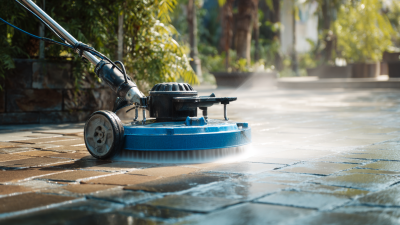
Surface Cleaners Balanced rotating arms, sealed bearings, stable housing and splash-control skirt or guard. Performance depends on deck diameter, nozzle configuration, flow rate, pressure and the surface being cleaned. Enclosed rotating jets can improve cleaning uniformity and reduce overspray, splashback and operator exposure compared with an unshielded spray pattern. Verify maximum pressure, required flow rate, compatible inlet connection, replacement swivel availability and the recommended surface types.
Water Inlet Filters Washable filter element, sufficient flow capacity and a transparent or easily serviceable housing. Filtration ratings are commonly expressed in mesh or microns; conversion depends on wire diameter and screen construction. Helps prevent sand, rust and other particles from damaging pumps, valves and nozzle orifices, improving equipment reliability. Choose a filter that matches the machine's inlet flow and connection size, and clean it regularly to prevent restricted water supply.
Seals and O-Rings Elastomer selected for compatibility with water temperature, detergents, oils and other chemicals in use. EPDM is commonly suitable for water and many alkaline solutions, while FKM is often selected for improved resistance to oils and elevated temperatures; compatibility must be confirmed for each chemical. Correct material selection reduces swelling, cracking, leakage and premature replacement of fittings and pumps. Review chemical compatibility, temperature rating, cross-section, hardness and seal dimensions rather than choosing solely by appearance.
Metal Fittings and Couplers Accurate machining, corrosion-resistant material, undamaged locking mechanism and correctly rated pressure capacity. Stainless steel, brass and plated steel are common materials; corrosion resistance varies by grade, coating and exposure conditions. Reliable couplers reduce connection failures and leakage while durable materials help maintain performance in wet or chemically exposed environments. Confirm thread standard, plug and socket profile, pressure and temperature limits, material compatibility and lock-release procedure.
Electrical Safety Accessories Residual-current or ground-fault protection, weather-suitable enclosures and intact cables and plugs. Protection requirements vary by country and installation type. Examples include GFCI requirements in North America and RCD requirements in many other regions. Appropriate protection can reduce the risk of electric shock when water and electrical equipment are used in the same work area. Use a qualified electrician where required and verify voltage, frequency, ingress protection, grounding and local electrical-code compliance.
Personal Protective Equipment Eye and face protection, hearing protection, protective gloves, suitable clothing and slip-resistant safety footwear. Common references include ANSI/ISEA Z87.1 or EN 166 for eye protection, EN 352 for hearing protection and EN ISO 20345 for safety footwear. Helps protect against flying debris, splash, noise exposure, wet surfaces and accidental contact with cleaning chemicals. Select PPE based on pressure, splash direction, noise level, chemical hazards, workplace risk assessment and applicable national standards.
Maintenance and Replacement Parts Clearly identified seals, filters, nozzles and service components with documented replacement intervals. Preventive maintenance intervals should follow the equipment manufacturer's instructions and the actual frequency and severity of use. Routine inspection and timely replacement help preserve pressure stability, reduce unexpected failures and extend the service life of major components. Prefer supplies with traceable specifications, dimensional drawings, service instructions and consistent replacement availability across operating regions.

Why Quality Supplies Offer Better Long-Term Value

Why Do Global Buyers Choose Quality Pressure Washing Supplies?

Why Quality Supplies Offer Better Long-Term Value

Global buyers often choose quality pressure washing supplies because daily performance affects total operating costs. On a busy jobsite, a dependable hose connects quickly and resists twisting. A stable nozzle delivers a more consistent spray pattern. Small details matter.

Experienced contractors usually inspect fittings, seals, hose layers, and chemical resistance before purchasing. These parts face pressure, water, movement, and changing temperatures. Better materials can reduce leaks, unexpected stoppages, and repeated replacements. The savings appear gradually. They are not always obvious after one job.

In field experience, reliable equipment also makes training easier for new operators. Clear connections and predictable pressure reduce avoidable mistakes. Maintenance records can show whether a product truly performs over time. That evidence supports more responsible purchasing decisions.

However, quality does not make every job easy. A higher-priced item can still fail when stored poorly or used beyond its specifications. I have seen durable hoses damaged by sharp corners and frozen water. That is the uncomfortable part of long-term value. Good supplies still require correct handling, regular inspection, and timely replacement. A thoughtful buyer considers both product quality and working habits.