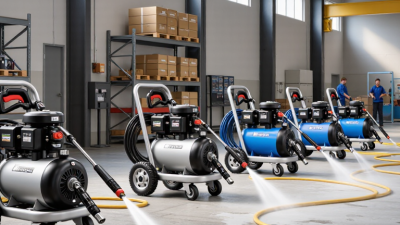
2026 Best Pressure Washing Supplies for Global Buyers
Choosing pressure washing supplies for global markets in 2026 takes more than comparing prices. Buyers need equipment that performs reliably, fits their machines, and can be supported after delivery. A practical review should cover pressure washers, hoses, spray guns, nozzles, surface cleaners, detergents, and protective gear. Small details matter. A connector that looks right may still differ in thread type or size. Confirm the machine’s pressure and flow requirements before selecting accessories, and check the manufacturer’s specifications rather than relying on product photos.
For international sourcing, compare materials, temperature ratings, replacement-part availability, warranty terms, and shipping options. Ask suppliers for clear product data, compatibility guidance, and documentation for the exact model being quoted. Check whether wear parts such as seals and nozzle tips are easy to reorder. Fit varies. So does service quality. A low purchase price can become less attractive when a hose needs replacing and no compatible part is available. Even a carefully matched kit can disappoint if its real operating conditions differ from the buyer’s setup. That deserves more attention than it often gets.
This guide highlights practical buying considerations, common product categories, and questions worth asking suppliers. It does not treat one brand or configuration as right for every job. Instead, it helps buyers compare options against cleaning tasks, water supply, operator needs, and maintenance plans. Verify important claims directly with manufacturers or authorized sellers before placing a large order. A little caution helps.
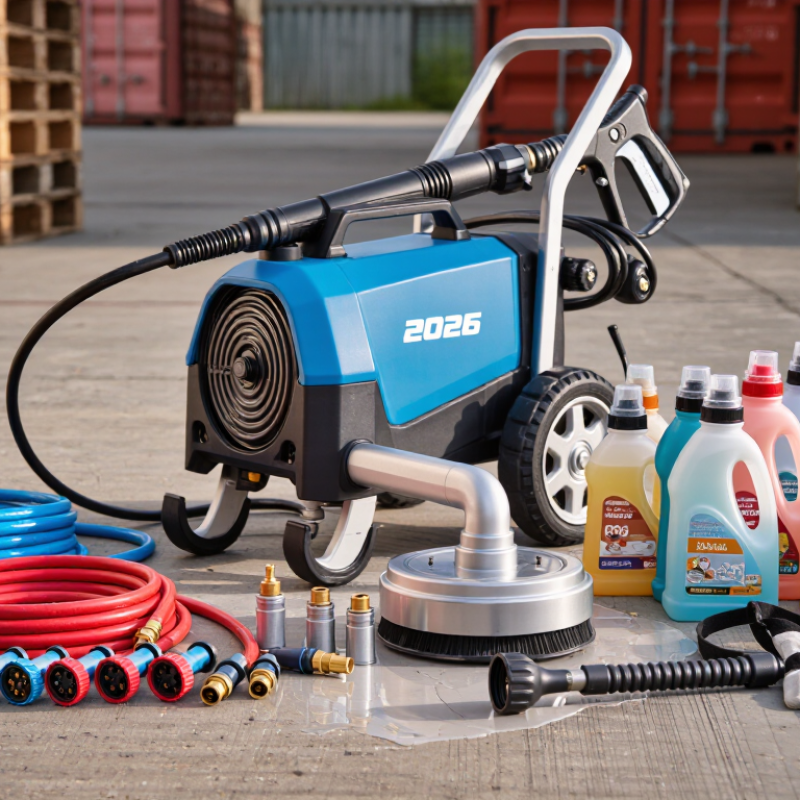
Classify Pressure-Washing Supplies by PSI, GPM, and Equipment Type
Buyers should compare pressure-washing supplies by pressure, flow, and equipment type—not PSI alone.
Light-duty machines commonly fall near 1,300–1,900 PSI and 1.2–1.5 GPM.
Medium-duty units often reach 2,000–2,800 PSI and 1.8–2.5 GPM.
Heavy-duty equipment may exceed 3,000 PSI and 2.5 GPM.
These are screening ranges, not universal standards. A useful comparison is cleaning units: PSI multiplied by GPM. But real results also depend on nozzle distance and surface condition.
Equipment type shapes the supply list. Electric units suit quieter, lighter work; gas-powered machines are often chosen where mobility and higher output matter. Hot-water systems help loosen oily grime, while cold-water systems cover routine rinsing.
Match hoses, filters, spray nozzles, and surface cleaners to the machine’s flow and pressure ratings. Numbers need context. A narrow nozzle can damage soft wood, even when the machine’s rating seems modest.
Grand View Research’s 2024 pressure-washer market report estimated the global market at about US$2.5 billion in 2023, reflecting broad demand across home and commercial use. That figure does not tell buyers which machine fits a job.
I would verify the manufacturer’s rated working pressure, not just its maximum figure, and check water supply capacity before purchase. It is easy to overbuy PSI and overlook GPM. That trade-off deserves a second look.
Match Pumps, Hoses, and Nozzles to Rated Pressure and Flow
For 2026 pressure-washing purchases, match the pump, hose, and nozzle to the same working range—not just the pump’s maximum pressure. Check rated pressure and flow together: pressure is commonly listed in psi or bar, while flow appears in gallons or liters per minute. A high-pressure pump with insufficient flow may clean slowly; a nozzle with an unsuitable orifice can also change performance.
The U.S. Department of Energy’s Improving Pumping System Performance sourcebook estimates that pumping systems use nearly 20% of global electricity. That figure covers pumping systems broadly, not pressure washers alone, but it highlights why oversized equipment can waste energy. Compare the pump’s operating specifications with the nozzle’s flow chart, then choose a hose rated above the system’s working pressure and suitable for its water temperature. Small details matter.
Look for complete specifications, not headline numbers. A pressure rating without flow tells only part of the story. Keep fittings compatible, and inspect hose markings for working pressure rather than relying on appearance. The awkward part: published ratings do not guarantee identical results in every setup; hose length, wear, and water supply can affect performance. Check the actual operating conditions before ordering.
Check Cleaner Safety Against IEC 60335-2-79 and ISO 12100
For global buyers, cleaner safety should be checked before price or accessory count. IEC 60335-2-79 sets safety requirements for high-pressure and steam cleaners. Ask suppliers for test documentation covering the exact cleaner model and compatible accessories. Check rated pressure, water temperature, hose connections, trigger-gun operation, and nozzle compatibility. A mismatch is not a minor detail. A loose coupling or damaged hose can turn a routine wash into a serious hazard. Paper checks can miss wear, so inspect samples under realistic working conditions.
Use ISO 12100:2010 to review hazards across operation, cleaning, and maintenance. Its risk-assessment approach helps buyers consider water-jet injuries, hose movement, noise, electrical exposure, and chemical handling. The U.S. Bureau of Labor Statistics reported 2.4 recordable injury and illness cases per 100 full-time workers in private industry in 2023. That figure covers all private industries, not pressure-washing work specifically, but it shows why routine safeguards matter. Check for clear operating instructions, effective shutoff controls, and accessible replacement parts. Small checks matter. Even a compliant machine can be used unsafely when instructions are vague or protective equipment does not fit. Teams should document what they verify, then revisit the checklist after field feedback.
2026 Best Pressure Washing Supplies for Global Buyers
Buyer checklist: evidence to review against IEC 60335-2-79 and ISO 12100
IEC 60335-2-79 covers safety requirements for high-pressure cleaners and steam cleaners; ISO 12100 provides a framework for machinery risk assessment and risk reduction. Confirm the applicable editions and request relevant product evidence from suppliers.
Bar values count the evidence prompts in this illustrative buyer checklist. They are not test results, compliance scores, or clause counts.
- Scope & ratings: intended use; rated pressure and flow.
- Risk assessment: identified hazards; foreseeable misuse; risk-reduction measures.
- Controls & safeguards: trigger and stop controls; restart behavior; protection from accessible hazards.
- Pressure system: component working-pressure ratings; hose, gun, and nozzle compatibility; leakage or pressure-test evidence.
- Instructions & validation: operating and maintenance instructions; relevant test or conformity documentation.
Screen Detergents Using GHS Labels, SDSs, and Local Chemical Rules
Pressure-washing detergent needs more than a promising label. Check its GHS pictograms, signal word, hazard statements, and precautionary advice before requesting a quote. A corrosive hazard, for example, changes storage and handling needs. So does a warning about eye irritation. Match these details to the workers, equipment, and surfaces involved.
Read the SDS alongside the label. Compare Section 2 for hazards, Section 3 for ingredients, and Sections 7 and 8 for handling and exposure controls. Section 9 can help confirm physical properties, such as pH, that may affect equipment or surface compatibility. Check the recommended dilution, too. A concentrate that looks economical may require different dosing tools or protective equipment. Small details matter.
Rules differ by destination. Confirm whether the product can be imported, stored, used, and disposed of under local chemical requirements. Ask for a current SDS in a language workers can understand, and verify that its product name and formulation match the container. I would not rely on a translated sales sheet alone. It is easy to compare drum prices and miss the cost of training, storage, or wastewater controls. Sometimes the paperwork raises more questions than it answers. That is a reason to pause and ask the supplier or a qualified local adviser before shipment.
Compare Suppliers by ISO 9001, Warranty Terms, and Landed Cost
For global buyers, an ISO 9001 certificate is a useful screening tool, not proof that every pressure washer, hose, or nozzle will perform well. The ISO Survey 2022 recorded 1,265,216 valid ISO 9001 certificates across 189 countries and economies. Ask suppliers to confirm the certificate’s validity, issuing body, and scope, then check that it covers the actual manufacturing site. A certificate is only a starting point. Compare pump test records, spare-parts availability, and quality checks for seals and fittings.
Warranty terms can change the real value of a quote. Check coverage length, exclusions for wear parts, labor costs, return freight, and who pays for diagnosis. For landed cost, compare more than the unit price: include freight, insurance, import charges, customs handling, and replacement parts. The World Bank’s Logistics Performance Index 2023 assesses factors such as shipment timeliness and logistics reliability, both of which can affect delivery planning. Request a written, itemized quote with an agreed delivery point and currency. Small fees add up.
Tips: Ask for a sample warranty claim process and a landed-cost estimate for one complete order. Compare identical specifications. I would still leave room for uncertainty: transit times and exchange rates can shift after quoting.