China Top Pressure Washing Supplies Manufacturers?
Choosing China’s top pressure washing supplies manufacturers requires more than comparing prices. A dependable supplier must combine engineering skill, consistent quality, transparent communication, and practical after-sales support. This matters when a pump runs for hours, a hose drags across rough concrete, or a nozzle faces heavily stained stone.
Doug Rucker, a veteran pressure-washing trainer and industry educator, has said, “The right equipment makes the job safer, faster, and more profitable.” His point remains useful when evaluating Chinese manufacturers. Strong suppliers usually provide clear pump specifications, tested flow rates, durable fittings, and replacement parts that remain available after purchase. Their factories should also demonstrate quality-control procedures, product testing, and experience serving international distributors.
The best pressure washing supplies may include pressure washers, high-pressure hoses, spray guns, surface cleaners, pumps, reels, nozzles, and chemical injectors. However, impressive catalogs can hide inconsistent performance. A polished website proves little. Factory audits, sample testing, certification checks, and customer references offer stronger evidence.
Look closely at practical details. Does the hose stay flexible in cold conditions? Do brass fittings resist corrosion? Can the pump maintain stable pressure during long cleaning sessions? These questions reveal more than marketing language.
There is no perfect manufacturer.
Even experienced buyers can overlook small weaknesses, especially when samples perform better than bulk orders. Therefore, this guide examines leading Chinese suppliers through product quality, manufacturing capability, customization, export reliability, and service responsiveness. Some rankings may remain debatable, but careful comparison can reduce costly surprises and support safer, more efficient purchasing decisions.
Understanding China’s Pressure Washing Supplies Manufacturing Industry
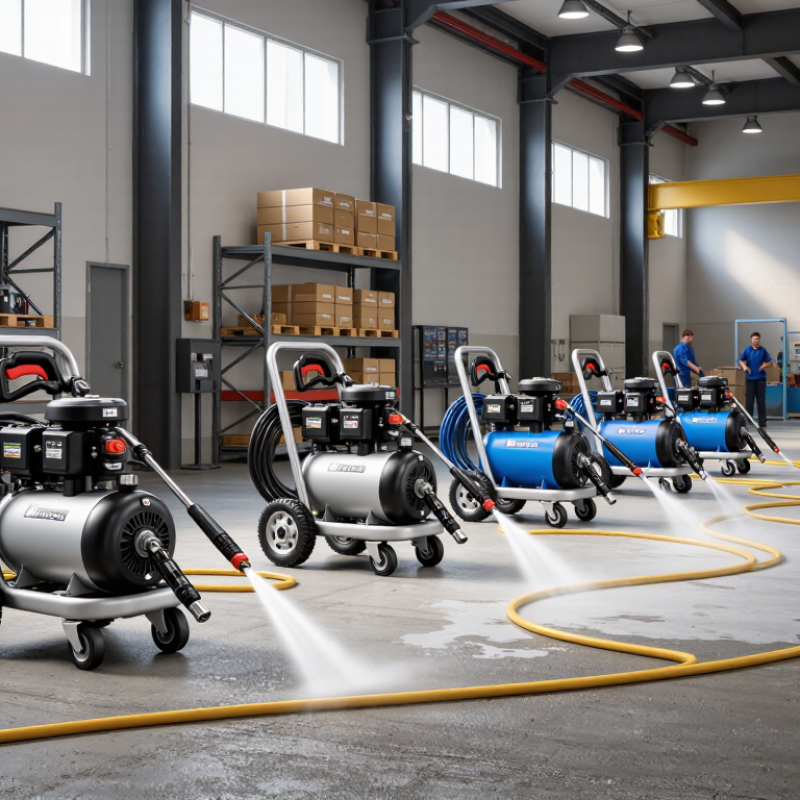
China’s pressure washing supplies manufacturing industry is broader than finished machines. It includes pumps, hoses, spray guns, nozzles, filters, seals, and molded plastic parts. Grand View Research’s 2024 report estimates the global pressure washer market at approximately US$2.9 billion in 2023. It also projects steady growth through 2030. This demand encourages Chinese factories to offer standard components and custom assemblies. In practice, factory capability varies sharply. A polished catalog proves little.
Professional evaluation should examine pump materials, motor protection, working pressure, flow rate, and duty-cycle testing. ISO 9001 certification may indicate process control, but it cannot guarantee equal performance in every batch. International Trade Centre Trade Map data also confirms China’s strong position in machinery and mechanical appliance exports. However, low pricing may hide thinner seals, inconsistent threads, or weak packaging. Request test reports, sample inspection records, spare-part availability, and traceable production dates. I have learned one easily missed detail: hose bend radius can affect cleaning speed more than peak pressure. That assumption deserves checking.
Tips: Compare working pressure, not peak pressure. Request samples from separate batches. Check fittings by hand. Measure heat and noise after continuous operation. Keep written acceptance criteria. A factory may pass one sample test but miss later consistency. That risk deserves attention.
| Supply Category | Common Product Types | Typical Technical Specifications | Common Materials | Typical Manufacturing Considerations in China | Buyer Quality-Check Points |
|---|---|---|---|---|---|
| High-Pressure Pumps | Triplex plunger pumps, axial-cam pumps, replacement pump assemblies | Working pressure commonly ranges from 100 to 500 bar; flow rates commonly range from 5 to 30 L/min for portable and light-commercial equipment | Brass or aluminum pump heads, stainless-steel plungers, ceramic or composite plungers, elastomer seals | Precision machining, seal installation, pressure testing, and compatibility with electric motors or gasoline engines are key production steps | Verify rated pressure, continuous-duty performance, flow accuracy, thermal behavior, shaft dimensions, and leakage-test records |
| Pressure-Washer Hoses | Single-wire braided hoses, dual-wire hoses, non-marking hoses, drain and sewer hoses | Common working-pressure ratings range from 150 to 400 bar; common lengths are 5 m, 10 m, 15 m, and 20 m | Thermoplastic rubber, PVC, synthetic rubber, textile braid, and steel-wire reinforcement | Hose extrusion, reinforcement braiding, crimping, and end-fitting assembly determine pressure performance and service life | Check burst pressure, bend radius, temperature range, coupling retention, abrasion resistance, and pressure-test results |
| Spray Guns and Lances | Trigger spray guns, insulated lances, adjustable lances, telescopic wands | Typical operating pressures range from 100 to 350 bar; lance lengths commonly range from 300 mm to 2,000 mm | Engineering plastics, brass, stainless steel, aluminum, and corrosion-resistant springs | Mold accuracy, trigger-valve sealing, ergonomic design, thread compatibility, and fatigue testing influence product reliability | Inspect trigger force, safety-lock function, swivel operation, connection dimensions, sealing performance, and chemical compatibility |
| Nozzles and Orifices | Flat-fan nozzles, rotary nozzles, turbo nozzles, foam nozzles, drain-cleaning nozzles | Spray angles commonly include 0°, 15°, 25°, and 40°; nozzle orifice sizes are selected according to pump flow and pressure | Brass, stainless steel, hardened stainless steel, ceramic, and molded engineering plastics | Orifice precision, spray-pattern consistency, erosion resistance, and correct color or size identification are important for production control | Confirm actual flow rate, spray angle, orifice size, wear resistance, thread standard, and compatibility with the intended pressure washer |
| Quick Couplers and Fittings | Quick-connect plugs, sockets, adapters, swivels, hose-end fittings, thread converters | Common connection sizes include 1/4 inch, 3/8 inch, and 1/2 inch; working-pressure ratings commonly range from 200 to 400 bar | Plated steel, stainless steel, brass, aluminum, nitrile seals, and fluorocarbon seals | Thread machining, heat treatment, plating, dimensional control, and seal assembly affect interchangeability and service life | Check thread standard, dimensional tolerances, coupling retention, corrosion resistance, seal material, and leakage under pressure |
| Foam and Chemical-Application Equipment | Foam cannons, detergent injectors, chemical tanks, proportioning accessories | Common bottle capacities range from 0.5 L to 2 L; adjustable dilution systems are used for vehicle, facility, and industrial cleaning | Polypropylene, polyethylene, brass, stainless steel, and chemical-resistant elastomers | Internal mixing design, chemical resistance, nozzle selection, bottle-thread accuracy, and flow adjustment are major manufacturing factors | Test dilution consistency, chemical compatibility, suction performance, bottle sealing, adjustment range, and resistance to cracking |
| Surface Cleaners | Rotary surface cleaners, deck cleaners, driveway cleaners, patio-cleaning attachments | Common cleaning widths range from 250 mm to 500 mm; operating pressure commonly ranges from 150 to 350 bar | Stainless steel, aluminum, polypropylene, brass, ceramic bearings, and molded protective covers | Rotor balancing, bearing protection, spray-bar alignment, splash-guard design, and corrosion resistance affect cleaning uniformity | Evaluate rotational stability, cleaning-width consistency, bearing sealing, skirt durability, pressure rating, and spare-part availability |
| Water Inlet and Filtration Parts | Inlet filters, garden-hose adapters, backflow accessories, water tanks, low-pressure connectors | Common inlet connections are 3/4 inch garden-hose fittings; filtration levels commonly range from coarse mesh to approximately 100 mesh | Polypropylene, nylon, brass, stainless steel mesh, and transparent polymer housings | Filter-mesh uniformity, injection-molding quality, thread accuracy, and resistance to water pressure and chemicals are essential | Check filtration rating, inlet flow restriction, housing strength, thread fit, gasket quality, and ease of filter cleaning |
| Electric Motors and Control Components | Induction motors, universal motors, thermal protectors, switches, capacitors, cable assemblies | Portable equipment commonly uses single-phase power; common supply systems include 110–120 V and 220–240 V at 50 or 60 Hz | Copper windings, laminated electrical steel, aluminum or cast housings, thermoplastics, and rubber cable jackets | Electrical safety, insulation quality, thermal protection, noise control, vibration reduction, and regional plug requirements must be managed | Verify voltage, frequency, rated current, insulation class, ingress protection, thermal protection, noise level, and electrical safety documentation |
| Gasoline-Engine Accessories | Engine mounting plates, recoil starters, fuel tanks, throttle controls, exhaust guards | Common portable commercial units use small four-stroke gasoline engines, often in the approximate 5–15 hp range | Steel, aluminum, cast iron, fuel-resistant polymers, rubber vibration mounts, and heat-resistant coatings | Mounting alignment, vibration control, fuel-system safety, exhaust-temperature management, and compliance with destination-market requirements are important | Check engine compatibility, mounting dimensions, vibration behavior, fuel leakage, heat shielding, noise, and applicable emissions requirements |
| Replacement Seals and Repair Kits | Pump seal kits, valve kits, O-ring sets, unloader-valve kits, hose-repair components | Seal dimensions and materials vary by pump design; common elastomers include NBR, EPDM, and FKM | NBR, EPDM, FKM, PTFE, polyurethane, stainless steel, and ceramic components | Material formulation, dimensional accuracy, surface finish, and correct kit identification are critical for aftermarket compatibility | Confirm exact dimensions, hardness, temperature range, chemical compatibility, compression performance, and packaging identification |
| Packaging and Export Preparation | Retail cartons, export cartons, molded inserts, barcode labels, moisture protection, palletized shipments | Packaging is typically selected according to product weight, impact sensitivity, container loading plan, and destination handling conditions | Corrugated board, molded pulp, expanded polyethylene, plastic bags, desiccants, and wooden or composite pallets | Protection against impact, moisture, abrasion, and mixed-component loss is important during domestic transport and international shipping | Review drop-test performance, carton strength, moisture protection, labeling accuracy, spare-part separation, and container-loading efficiency |
| Compliance and Documentation | Technical datasheets, inspection reports, user manuals, packing lists, certificates, and test records | Requirements depend on product type and destination market; electrical products may require regional safety and electromagnetic-compatibility documentation | Not applicable; documentation should accurately describe the physical product and test results | Manufacturers commonly support private-label packaging, multilingual manuals, pre-shipment inspection, and customized documentation | Check traceability, declared specifications, test methods, revision control, safety markings, warranty terms, and consistency between samples and bulk goods |
Related Posts
-
2026 Best Pressure Washing Supplies for Global Buyers
-

Why Do Global Buyers Choose Quality Pressure Washing Supplies?
-

Transform Your Home exterior: The Ultimate Guide to Pressure Washer Cleaning Techniques
-
What is the Best Pressure Washing Supplies for Effective Cleaning
-

Top Pressure Washing Equipment to Invest in for 2025: Ultimate Guide
-

Top 10 Power Washing Equipment Tips for a Sparkling Clean Home